Maybe you’ve come across the term AMH (Anti-Müllerian Hormone) when considering fertility options. From my experience as a fertility specialist,
I know the significance of being in control and having faith along the way.
Although a substantial increase of AMH by one single food or supplement is not possible, research reveals that some nutrients can keep the ovaries healthy and the eggs can be of good quality.
I will explain to you here the meaning of AMH, the role of diet and lifestyle, and the time when you need to think about fertility treatments.
Can Food Really Raise AMH Levels?
Certain research and fertility specialists indicate that consumption of nutrient-dense foods might be beneficial in sustaining or elevating AMH levels.
Although changes in diet should not be expected to significantly change AMH levels within a short period of time, a well-balanced diet is nevertheless conducive to hormone production, egg quality, and overall ovarian health.
How to Increase AMH Levels in Females Naturally
Women, in general, still want to use natural methods before they decide on a medical treatment. Below is a list of some food that is known to be helpful in balancing reproductive hormones and assisting in the production of AMH.
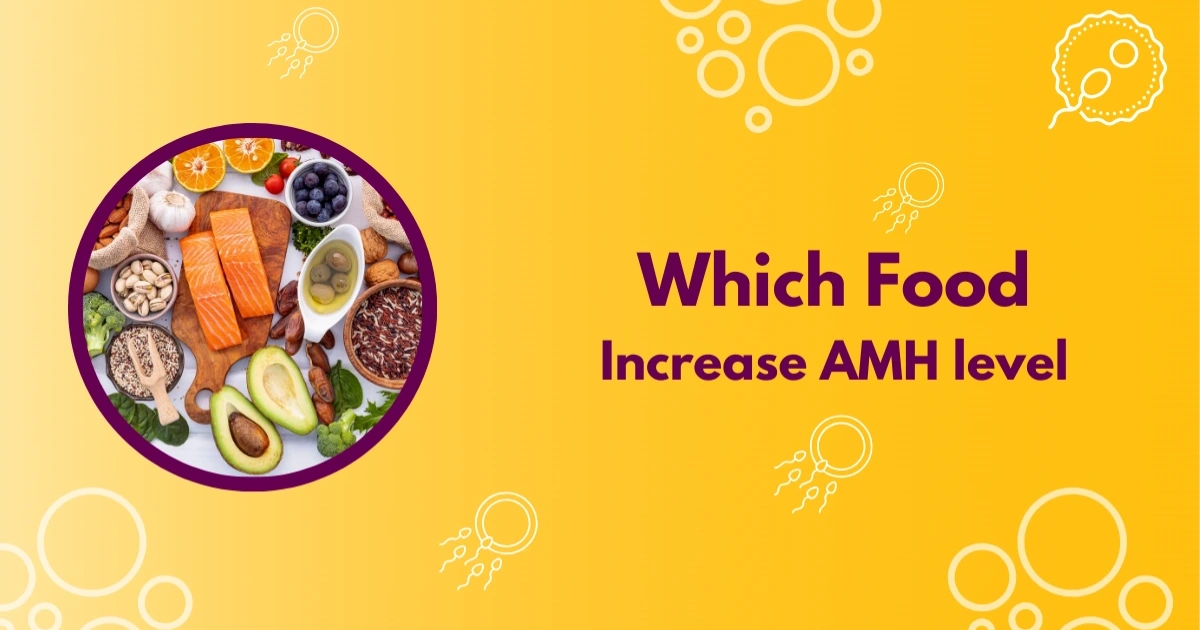
Which Food increase AMH level

Green leafy vegetables
Green leaves like kale, broccoli, arugula, and spinach are good for your overall health, not just fertility. They are rich in vitamin B9, fiber, and folic acid and can improve fertility.
Almonds
Almonds are naturally high in Vitamin C, minerals, proteins, and antioxidants. They help regulate ovulation and help increase ovarian reserve. Almonds are also known to increase sexual desire in women naturally.
Pumpkin seeds
Pumpkin seeds contain a lot of zinc and other vital minerals that are very necessary for the production of female reproductive hormones such as anti-Müllerian hormone (AMH) and progesterone.
These hormones not only control the menstrual cycle but also ease the symptoms of Polycystic Ovary Syndrome (PCOS) – a condition which is naturally more common in females.
If you eat too many pumpkin seeds, you may gain some extra weight and thus, increase your chance of insulin resistance.
Insulin resistance is the main reason for PCOS, as a result, it may cause irregular periods and trouble in getting pregnant. Therefore, it is very important to consume these seeds in moderation as part of a balanced diet.
According to a report by the World Health Organization (WHO), nearly 70% of women with PCOS are not diagnosed and, hence, are mostly unaware that their delayed periods are due to this condition.
Garlic
One of the components in garlic is sulfur and it is capable of elevating the body’s antioxidant glutathione level.
Glutathione is basically a fertility enhancer for both genders. It supports the enhancement of AMH levels, the regulation of menstrual cycles, and the overall reproductive health in women. Additionally, it can make chromosomal abnormalities in the egg less likely.
Eggs
Eggs have a high amount of vitamin B and omega-3 fatty acids. Both of these are essential for a woman’s fertility and egg production.
Berries
Berries have antioxidants. They can help prevent cell oxidation and protect egg cells from free radicals.
Oysters
Oysters are rich in zinc and amino acids, both of which are essential in improving egg quality and fertility in women.
Nuts and seeds
You probably eat nuts and seeds as a snack. But did you know that they can help improve your fertility?
Nuts and seeds are rich in Vitamin E, an important vitamin that is essential for your egg’s health and development.
Avocado
Avocados are rich in monounsaturated fats and vitamin E. These nutrients are essential for fertility and egg production.
Kiwi
Kiwis are rich in Vitamin C and folic acid, both of which are essential for fertility.
Foods That May Harm AMH Levels
Some foods and habits may cause the body’s hormonal system to be less effective and change the AMH level in the blood.
The consumption of processed foods, sugary drinks, caffeine in excess, alcoholic beverages, and trans fats, in general, can lead the body to produce more free radicals and cause inflammation, which can then impair the function of the ovaries.
The thing is that you should never stop consuming a diet rich in antioxidants, whole grains, and healthy fats.
Supplements That May Help Increase AMH Levels
So far, we have seen the foods you can take to increase your AMH levels. Now, let’s look at some supplements that you can add to your diet for increased AMH.
DHEA
DHEA (Dehydroepiandrosterone) is a hormone produced by the adrenal glands. DHEA stops the small antral follicles from atresia and helps improve AMH levels in the body.
Some studies have shown DHEA to improve the ovarian reserve by increasing AMH levels and egg count.
But you need to know that it does not work for all women, and more research is needed to be done on its effects on ovarian reserve.
CoQ10
CoQ10 (coenzyme Q10) is a biologically active antioxidant that has been demonstrated to be one of the factors that can lead to an improvement of the quality of female eggs.
CoQ10 is even in the human body but decreases with age.
On a separate note, the supplement CoQ10 intake has been reported to cause the enhancements of reproductive potential in both male and female.
The main hormone fixed by the process is AMH, and thus, the phenotypic maternal cells are activated, which results in the improvement of egg quality and embryo development in females.
Melatonin
Melatonin is an antioxidant and also can be used to elevate your AMH levels.
Being an antioxidant, melatonin hinders oxidization in the egg cells and thus, it does not allow the radicals to be generated.
Egg quality can be better through this process, and the AMH levels can be higher as well.
Vitamin D
Vitamin D supplements have also been shown to increase AMH levels in the body. Vitamin D interacts with the AMH hormones and stimulates its functionality, thus improving a woman’s fertility.
When Low AMH Means Considering IVF/IUI
Sometimes a very low AMH level can be indicative of a limited natural egg reserve.
If pregnancy does not happen on its own within a span of a few months while maintaining a healthy lifestyle, doctors specializing in fertility may suggest the use of reproductive technologies such as IVF or IUI.
How IVF/IUI Treatments Address Low AMH
IVF (In Vitro Fertilization) treatment and IUI (Intrauterine Insemination) treatment procedures are essentially ways to increase the probability of conception by means of control stimulation and obtaining eggs. In certain instances, females with low AMH levels are capable of reacting to gentle stimulation methods tailored to their low ovarian reserve.
Is It Possible to Get Pregnant with Low AMH?
Yes, conceiving naturally with a low AMH level is still possible, although the chances might be reduced.
A diminished ovarian reserve implies that there are less eggs to be fertilized and, in addition, the quality of the eggs might be lower.
Still, the situation of each woman is different from the others.
There are cases of women who get pregnant naturally with low AMH, whereas in the rest cases doctors suggest IVF, IUI, or egg rejuvenation procedures.
Conclusion
All these foods and supplements that we have discussed are great fertility enhancers and have also been known to increase AMH levels in women.
Nevertheless, keep in mind that the results are still uncertain and cannot be particularly expected in your case.
If you are having a hard time getting pregnant, the best thing to do is to consult a fertility
specialist to identify the causes of infertility. You can discuss it with your doctor and work out the best ways to solve your problems.
FAQs
A healthy, balanced diet rich in plant-based foods, healthy fats, and lower in processed foods supports hormone balance and ovulation, thus improving fertility.
Eggs provide important nutrients that support overall ovarian health, but there is no direct evidence that eating eggs alone specifically increases AMH levels.
AMH levels are mostly determined by age and genetics, so there’s no proven way to increase them quickly, but eating a fertility-friendly diet may help support ovarian health over time.
AMH naturally declines with age and can decrease further due to ovarian surgery, treatments like chemotherapy, or medical conditions affecting the ovaries.