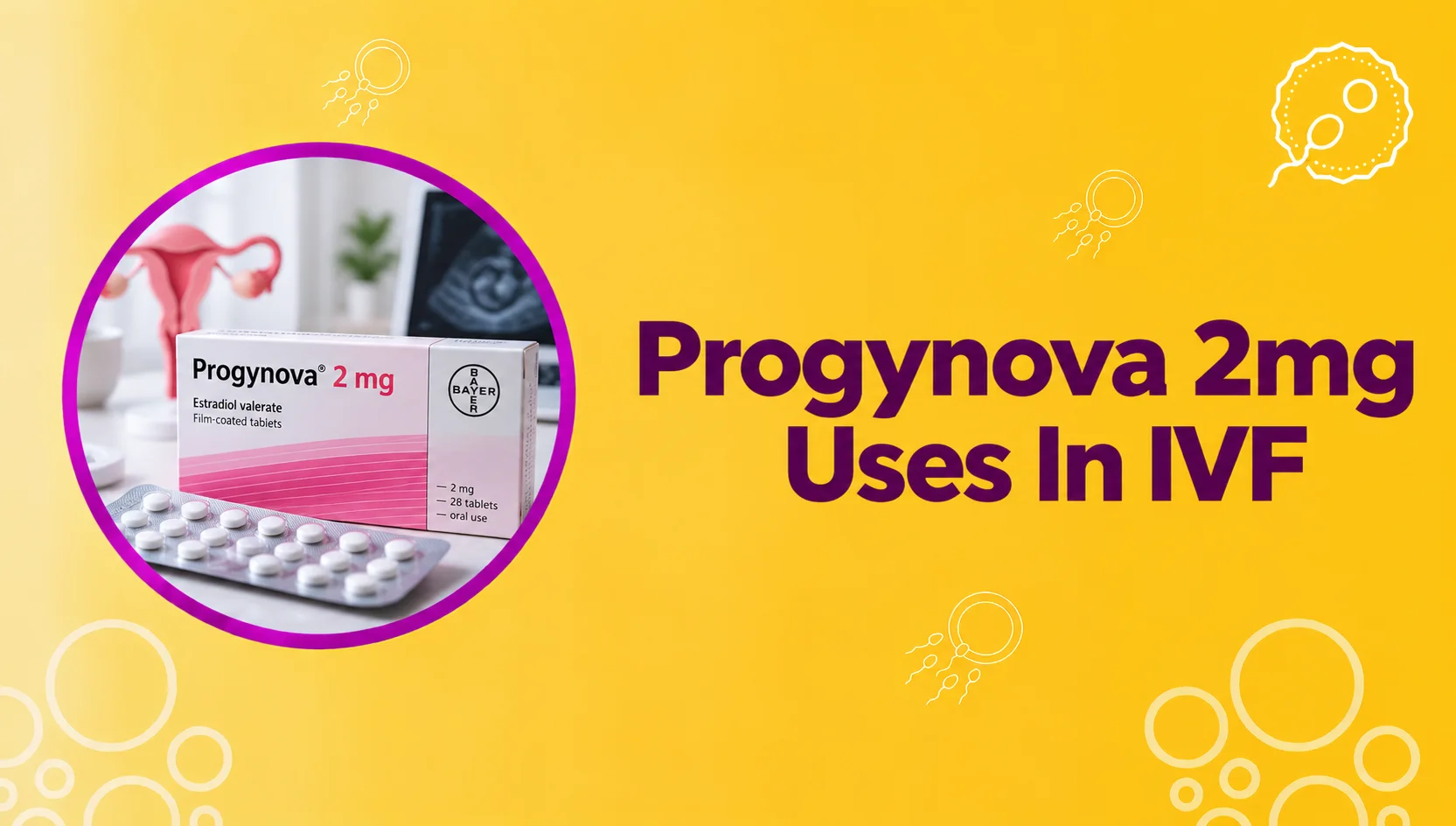
Progynova 2 mg uses in IVF are primarily related to preparing the uterine lining for embryo transfer in selected fertility treatment protocols. Progynova contains estradiol valerate, a form of estrogen that supports endometrial development. Fertility specialists may prescribe it during a programmed frozen embryo transfer cycle, depending on the patient's treatment plan.
If you are preparing for IVF, understanding why Progynova is prescribed, how it works, its possible side effects and how long you may need to take it can help you feel more confident about your treatment. However, the correct dosage and duration depend on your individual fertility protocol.
What Is Progynova 2 mg?
Progynova 2 mg is a prescription medication containing estradiol valerate, a form of the hormone estrogen.
Estrogen plays an important role in the menstrual cycle and supports the growth of the endometrium, which is the inner lining of the uterus. During certain fertility treatments, additional estrogen may be needed to prepare the uterine lining before an embryo is transferred.
Progynova may be prescribed as part of a programmed frozen embryo transfer (FET) cycle or another treatment plan where estrogen support is clinically appropriate.
It is not required for every IVF patient. Your fertility specialist will decide whether you need it based on your medical history, cycle pattern and treatment protocol.
What Are the Main Progynova 2 mg Uses in IVF?
The primary Progynova 2 mg uses in IVF involve endometrial preparation and providing estrogen when required by the treatment protocol.
1. Preparing the Uterine Lining for Embryo Transfer
One of the main reasons Progynova is prescribed during IVF is to support the development of the endometrium before embryo transfer.
Estrogen helps the uterine lining grow during the preparation phase. Your fertility specialist may monitor its thickness and appearance through ultrasound before deciding whether to proceed to the next stage.
A suitable lining is one factor considered during embryo transfer preparation, but it does not guarantee successful implantation or pregnancy.
2. Supporting Frozen Embryo Transfer
Progynova is commonly used in selected programmed frozen embryo transfer protocols.
In these cycles, estrogen is administered to prepare the uterine lining, and progesterone is introduced according to a carefully planned schedule. The embryo transfer is timed in relation to the duration of progesterone exposure and the developmental stage of the embryo.
The exact schedule varies between patients and clinics. Natural and modified natural frozen embryo transfer cycles may follow a different approach.
3. Supporting Endometrial Development
The endometrium responds to hormonal changes throughout the menstrual cycle. Estrogen supports its growth, while progesterone helps prepare it for the implantation phase.
When your fertility specialist determines that additional estrogen is appropriate, Progynova may be used to support endometrial development. The response varies, so monitoring may be necessary to assess whether the treatment is working as intended.
4. Providing Estrogen During Selected Fertility Protocols
Some patients need estrogen as part of a planned hormone replacement cycle or for another specific clinical indication.
Progynova may provide this estrogen support, but it is not a universal treatment for infertility, irregular periods, PCOS or every case of a thin uterine lining.
Your specialist will assess the underlying issue before deciding whether this medicine is appropriate.
How Does Progynova 2 mg Work During IVF?
Progynova supplies estradiol, which acts on the endometrium and supports its growth.
In a typical programmed frozen embryo transfer cycle, the process may involve the following stages:
-
Estrogen preparation: Progynova may be prescribed to support the growth of the uterine lining.
-
Monitoring: Your clinic may perform ultrasound scans and, when indicated, blood tests to assess your response.
-
Progesterone support: Progesterone is introduced at the appropriate time according to the prescribed protocol.
-
Embryo transfer: The transfer is scheduled to coordinate the embryo's developmental stage with the prepared endometrium.
Not every patient follows this exact sequence. Your fertility specialist will determine the appropriate approach based on your cycle and clinical circumstances.
It is also important to remember that successful implantation depends on several factors, including embryo characteristics, endometrial conditions and other reproductive factors. Progynova supports one part of the treatment process rather than guaranteeing the outcome.
When Is Progynova 2 mg Started During IVF?
The timing of Progynova depends on the fertility protocol prescribed by your doctor.
In a programmed frozen embryo transfer cycle, it may be started early in the treatment cycle or according to a schedule determined by your clinic. The timing may depend on:
-
The first day of your menstrual cycle.
-
Whether you are following a natural or programmed transfer cycle.
-
Your previous response to estrogen.
-
The thickness and appearance of your uterine lining.
-
The planned timing of progesterone administration and embryo transfer.
Do not start Progynova based on an online schedule or another patient's prescription. Starting, delaying or changing the medication without medical advice may interfere with your treatment plan.
What Is the Recommended Progynova 2 mg Dosage in IVF?
There is no single Progynova 2 mg dosage suitable for every IVF patient.
Your fertility specialist will prescribe the dose, frequency and duration according to your treatment protocol and clinical response. The number of tablets required per day can differ between patients.
Follow these precautions while taking the medication:
-
Take it exactly as prescribed.
-
Do not increase the dose to try to thicken your uterine lining faster.
-
Do not change the route of administration without explicit medical instructions.
-
If you miss a dose, follow your clinic's instructions or the medicine leaflet.
-
Do not double your next dose unless your doctor specifically advises you to do so.
Progynova is supplied as an oral tablet in its standard formulation. Use it by the prescribed route.
How Long Should You Take Progynova 2 mg During IVF?
The duration of treatment varies according to the IVF protocol and your response.
In some programmed frozen embryo transfer cycles, estrogen is continued during endometrial preparation and may be continued after embryo transfer under medical supervision. The duration may depend on whether pregnancy occurs and the subsequent treatment plan.
There is no universal rule that every patient should stop Progynova after embryo transfer or continue it until a particular week of pregnancy.
Do not stop Progynova or change your medication schedule without consulting your fertility specialist. If your pregnancy test is positive, follow your clinic's instructions about continuing or adjusting the medicine.
What Are the Benefits of Progynova 2 mg in IVF?
When appropriately prescribed, Progynova can support specific parts of a fertility treatment plan.
Supports Endometrial Growth
Estrogen helps the uterine lining develop during the preparation phase of selected embryo transfer protocols.
Helps Coordinate a Planned Transfer Cycle
In a programmed frozen embryo transfer cycle, estrogen and progesterone can be scheduled to coordinate endometrial preparation with the embryo transfer.
Provides Estrogen When Needed
Progynova can supply estrogen in treatment protocols where additional hormonal support is clinically indicated.
Supports Individualised Fertility Treatment
The medication may form part of a wider treatment plan that includes monitoring, progesterone administration and embryo transfer.
These benefits relate to its role in the prescribed protocol. Progynova does not independently guarantee implantation, prevent miscarriage or ensure a live birth.
Does Progynova 2 mg Improve IVF Success Rates?
Progynova may be an important part of a programmed frozen embryo transfer cycle, but taking it does not guarantee a higher IVF success rate.
The benefit of estrogen depends on the patient's circumstances and the type of embryo transfer protocol. There is no basis for claiming that one Progynova regimen is best for every patient.
Your fertility specialist will consider several factors, including:
-
Embryo development and quality.
-
Endometrial thickness and appearance.
-
The timing of progesterone exposure.
-
Your reproductive and medical history.
-
The type of embryo transfer cycle being used.
Do not assume that being prescribed Progynova means your estrogen levels are necessarily abnormal or that you cannot become pregnant without it.
What Are the Side Effects of Progynova 2 mg During IVF?
Like other estrogen medications, Progynova can cause side effects. Not everyone experiences them, and the severity can vary.
Possible side effects include:
-
Headache or migraine.
-
Nausea.
-
Breast tenderness or discomfort.
-
Bloating or abdominal discomfort.
-
Mood changes.
-
Spotting or changes in bleeding patterns.
-
Fluid retention.
Contact your fertility specialist if symptoms persist, become troublesome or interfere with your daily activities. Symptoms during IVF may also be related to other medications or the treatment cycle itself.
Serious Side Effects That Need Urgent Attention
Estrogen-containing medicines can increase the risk of blood clots in certain circumstances.
Seek urgent medical care if you experience:
-
Sudden chest pain or difficulty breathing.
-
Painful swelling, redness or warmth in one leg.
-
Sudden weakness, numbness or difficulty speaking.
-
A sudden, severe headache or new visual disturbances.
-
Severe abdominal pain or another symptom that feels urgent.
Do not wait for your next routine fertility appointment if you develop symptoms that could indicate a serious complication.
Who Should Avoid Progynova 2 mg or Use It With Caution?
Progynova is not suitable for everyone. Your doctor should review your medical history before prescribing it.
Estrogen-containing medicines may be contraindicated in certain conditions, including current or previous blood clots, some hormone-sensitive cancers, unexplained vaginal bleeding, severe liver disease and certain clotting disorders.
Tell your fertility specialist if you have:
-
A personal or family history of blood clots.
-
A history of stroke or certain cardiovascular conditions.
-
Liver disease.
-
A history of breast cancer or another estrogen-sensitive cancer.
-
Unexplained vaginal bleeding.
-
Migraines, particularly if they are new or associated with unusual symptoms.
-
Other medical conditions or medicines that may affect treatment safety.
This list is not exhaustive. Your doctor should assess your individual risks and refer to the official product information before treatment.
Can Progynova 2 mg Be Used for IUI?
Progynova is not routinely required for every intrauterine insemination (IUI) cycle.
A fertility specialist may prescribe estrogen in selected situations for a specific clinical reason. However, IUI treatment protocols differ from programmed frozen embryo transfer protocols, and the medicines used depend on the patient's diagnosis and treatment goals.
If Progynova has been prescribed during IUI, ask your doctor why it is needed and how your response will be monitored.
Is Progynova 2 mg Used for PCOS or a Thin Uterine Lining?
Progynova may be considered when estrogen is needed for endometrial preparation, but it is not a universal treatment for polycystic ovary syndrome (PCOS), irregular periods or a thin uterine lining.
PCOS can affect ovulation and menstrual regularity. A thin endometrial lining can also have different underlying causes. Your fertility specialist may evaluate your cycle, medical history, medications and ultrasound findings before deciding on treatment.
Do not take Progynova on your own to treat PCOS, regulate your period or improve your chances of conception.
Can You Become Pregnant Without Progynova During IVF?
Yes. Pregnancy can occur without Progynova when the medication is not required for the selected treatment protocol.
Some frozen embryo transfers use a natural or modified natural cycle, while others use a programmed hormone replacement protocol that includes estrogen.
The appropriate approach depends on your ovulation pattern, menstrual cycle, medical history and the fertility specialist's assessment.
If Progynova has been prescribed to you, do not skip it because another patient completed IVF without taking it. Their treatment protocol may be different from yours.
What Should You Do While Taking Progynova 2 mg?
Following your fertility clinic's instructions can help you use the medicine safely and keep your treatment schedule on track.
-
Take every dose according to your prescription.
-
Attend your scheduled ultrasound scans and other monitoring appointments.
-
Inform your clinic about side effects, missed doses and any new medications.
-
Do not change the dose or route of administration yourself.
-
Do not stop the medicine after embryo transfer or a positive pregnancy test without medical guidance.
-
Seek urgent medical care for symptoms that could indicate a serious complication.
Keeping a written medication schedule can be helpful when several medicines are prescribed during IVF.
Consult Your Fertility Specialist About Progynova 2 mg
Progynova 2 mg can be useful in selected IVF treatment plans, particularly when estrogen is needed for endometrial preparation. However, the correct dose, timing and duration depend on your individual circumstances.
Your fertility specialist can explain why the medicine has been prescribed, what monitoring is required and what to do if you experience side effects or miss a dose.
At The Hive Fertility, patients can discuss their fertility treatment plan with their care team and seek clarification about prescribed medicines before and during treatment.
Conclusion
The primary Progynova 2 mg uses in IVF relate to supporting uterine lining development in selected fertility treatment protocols, particularly programmed frozen embryo transfers.
Progynova contains estradiol valerate, an estrogen hormone that helps prepare the endometrium. It supports a specific part of fertility treatment but does not guarantee embryo implantation or pregnancy.
If Progynova has been prescribed for your IVF cycle, follow your fertility specialist's instructions regarding dosage, timing and duration. Seek medical advice if you experience concerning side effects or are unsure about your medication schedule.
Frequently Asked Questions
1. What are Progynova 2 mg uses in IVF?
Progynova 2 mg contains estradiol valerate, an estrogen hormone. It may be prescribed in selected IVF protocols, particularly programmed frozen embryo transfers, to support the development of the uterine lining before embryo transfer.
2. Is Progynova 2 mg necessary for every IVF patient?
No. Some patients require estrogen for endometrial preparation, while others may follow natural or modified natural embryo transfer protocols. Your fertility specialist will select the approach suited to your circumstances.
3. How many Progynova 2 mg tablets should I take during IVF?
The prescribed dose varies between patients and protocols. Take only the amount recommended by your fertility specialist, and do not change the dose independently.
4. How long should I take Progynova during IVF?
The duration depends on your treatment protocol and clinical response. Some patients continue estrogen after embryo transfer under medical supervision. Follow your clinic's instructions rather than stopping the medication yourself.
5. Does Progynova 2 mg help thicken the uterine lining?
Estrogen supports endometrial growth, so Progynova may be prescribed when additional estrogen is needed during preparation. The response varies, and ultrasound monitoring may be used to assess the lining.
6. Does Progynova 2 mg guarantee IVF success?
No. Progynova may support endometrial preparation in selected protocols, but it does not guarantee implantation, pregnancy or live birth. IVF outcomes depend on several clinical factors.
7. What are the common side effects of Progynova 2 mg?
Possible side effects include headache, nausea, breast tenderness, bloating, mood changes and spotting. Contact your doctor if symptoms persist or become concerning. Seek urgent care for chest pain, sudden breathlessness or painful swelling in one leg.
8. Can I stop Progynova after embryo transfer?
Do not stop Progynova without speaking to your fertility specialist. The medicine may be part of your planned hormonal support, and the appropriate stopping time depends on your treatment protocol.
9. Can Progynova 2 mg be used during IUI?
It may be used in selected fertility protocols for a specific clinical reason, but it is not routinely required for every IUI cycle. Your doctor will determine whether it is appropriate.
10. Can Progynova 2 mg treat PCOS or irregular periods?
Progynova is not a universal treatment for PCOS or irregular periods. Its use depends on the clinical reason for prescribing estrogen and the overall fertility treatment plan.
11. Can I take Progynova 2 mg without a doctor's prescription?
No. Progynova is a prescription hormone medication. It should be used under medical supervision because its suitability, dose and risks depend on your health history and treatment needs.
12. What should I do if I miss a dose of Progynova during IVF?
Follow the instructions from your fertility clinic or the medicine leaflet, and contact your clinic if you are unsure. Do not double the next dose unless your clinician specifically advises you to do so.