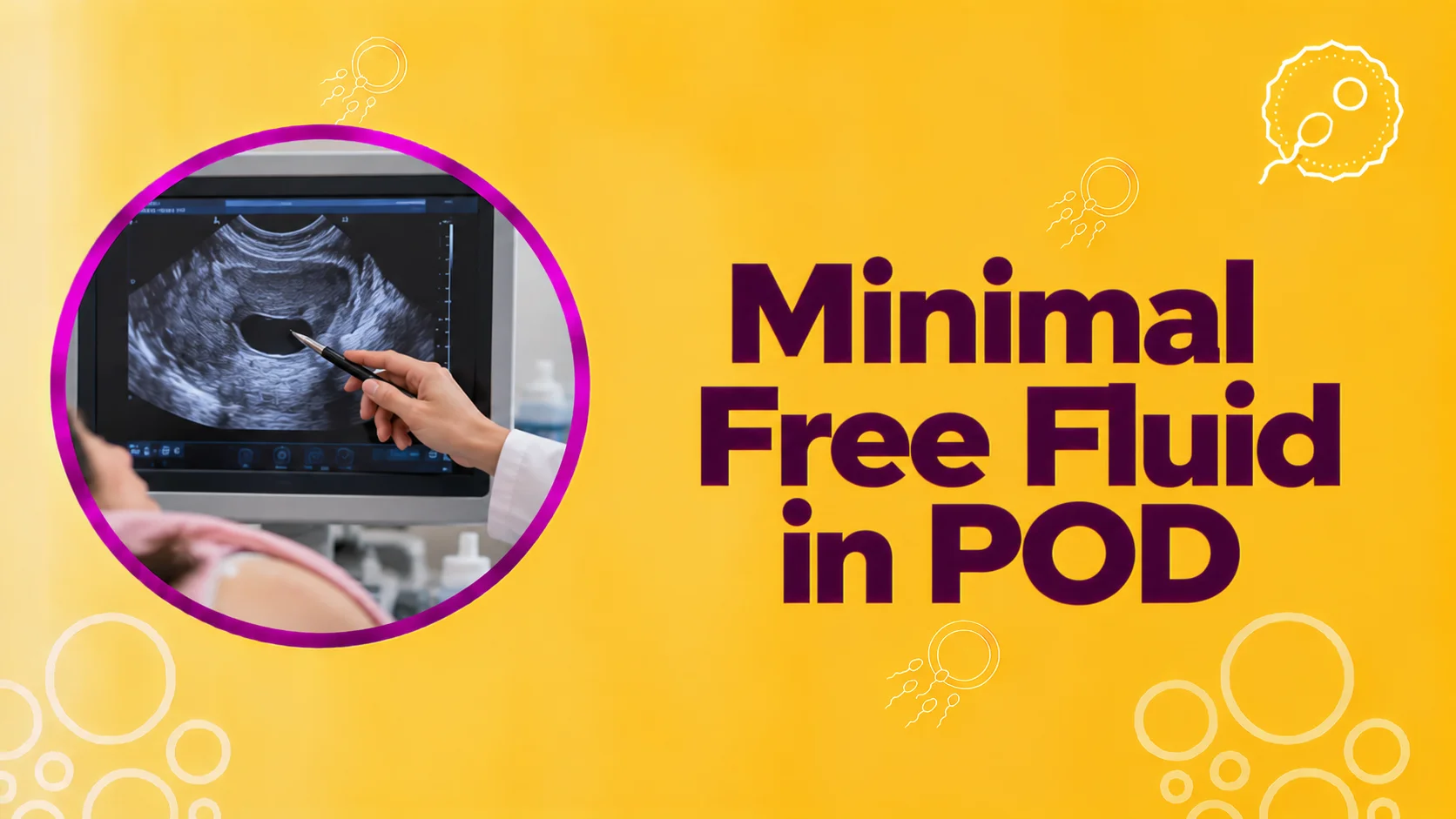
Many women get a little worried on seeing the words "minimal free fluid in POD" in their ultrasound report. The term sounds serious, and that too when it comes without any explanation. But do you know that in most women, this finding is a normal part of the monthly cycle itself?
Minimal free fluid in POD simply means a very small amount of fluid is seen in the space behind the uterus. For a woman in her reproductive years, this shows up mostly around ovulation or during periods, and would usually go off by itself in few days. It is only when pain, fever or a positive pregnancy test come along with it that the doctor takes a closer look.
This blog tells everything about what free fluid in POD means, why it shows up and when it needs attention. So, keep reading.
What is POD? (POD Full Form in Medical Gynaecology)
POD full form in medical gynaecology is the pouch of Douglas. It is otherwise known as the rectouterine pouch, and the same POD full form in medical reports is used by radiologists and sonologists too. Picture a small pocket, tucked in right between the back wall of the uterus and the rectum.
In a woman, this pocket is the lowest spot in the whole abdomen. Any fluid floating inside the abdomen would usually drain down and collect here itself, the way water collects at the bottom of a bowl. No wonder the sonologist never misses checking this spot in a pelvic scan.
What Does Minimal Free Fluid in POD Mean?
Here is the detailed breakdown of what the words in the report actually mean:
Free Fluid
Free fluid is the fluid that is lying loose in the pelvis, not held inside any organ, cyst or sac. Fluid does not bounce back the sound waves, so on the scan it shows up as a dark patch. That is all free fluid in POD means: a little loose fluid sitting in the pouch of Douglas.
Minimal or Trace
Coming to the amount, "minimal" or "trace" means only a thin layer is seen, and that too only a few millilitres in most women. Most of the time nobody measures the exact volume. Sonologists just put it in a word, like trace, minimal, mild, moderate or large. You may also see it written as minimal fluid in POD, minimal POD fluid or minimal POD collection. All of them describe the same thing.
Mild vs Minimal
Mild free fluid in POD means the layer is a little thicker than minimal, but still a small amount. Mild free fluid in POD is also seen quite often after ovulation. Likewise, minimal fluid in POD means the least amount that can be seen, and it hardly ever needs any treatment.
Minimal Free Fluid in Pouch of Douglas
Some reports spell it out fully as minimal free fluid in pouch of Douglas. There is no difference in the meaning. POD is only the short form used by doctors to save space.
No Free Fluid in POD
If your report says no free fluid in POD, it means the pouch looks dry and there is no fluid collection at all. This is also considered a normal finding. A dry pouch generally does not mean anything is missing. Many women show fluid only on certain days of the cycle.
Clear vs Echogenic Fluid
Clear fluid is totally dark on the scan, and it is mostly the plain watery type. Echogenic fluid has tiny bright specks floating inside. Blood or pus may look like this, so the doctor would take a closer look.
Is Minimal Free Fluid in POD Normal?
The answer to this, in most cases, is yes. So, if you are wondering whether free fluid in POD is good or bad, minimal fluid is mostly good news and nothing bad. A little fluid in the pelvis is seen in many healthy women during their reproductive years. The abdominal lining (peritoneum) makes a bit of fluid all the time, and this keeps the pelvic organs gliding smoothly over each other.
The following are the common situations where this finding is considered normal:
After Ovulation
This is the most common reason. When the egg gets released, the follicle that held it bursts open. The fluid from inside the follicle, at times with a little blood, spills into the pelvis and settles in the POD. So, free fluid in POD after ovulation is actually seen as a sign that ovulation has happened.
Fertility doctors in fact look for this during follicular monitoring scans, along with the collapsed follicle. It would normally clear off in a few days.
During Periods
Around period days, a little blood can flow backwards through the fallopian tubes and land in the pelvis. This is denoted as retrograde menstruation. It happens in many women, and the body absorbs this fluid without any trouble.
In the Second Half of the Cycle
The amount of pelvic fluid naturally goes up slightly in the second half of the cycle (luteal phase), under the influence of hormones. A scan done during these days may show minimal fluid, which is nothing to worry about.
Early Pregnancy
In early pregnancy too, a little free fluid in POD can be normal, especially if the pregnancy sac is clearly seen inside the uterus. The corpus luteum, which holds up the pregnancy in the first few weeks, may itself leak a bit of fluid.
Does Free Fluid in POD Mean Pregnancy?
Many women search for whether free fluid in POD means pregnancy. Not on its own, no. Women who are not pregnant get this fluid too, mostly after ovulation or just before periods, so the scan line by itself says nothing about conception.
A urine or blood hCG test confirms pregnancy, and a scan later shows the sac inside the uterus. Only thing is, when the test is positive but the uterus looks empty and there is fluid in the pouch, the doctor would want to rule out an ectopic pregnancy quickly. Otherwise, the fluid is only a side finding.
Is Minimal Free Fluid in POD Dangerous?
People often ask if minimal free fluid in pod is dangerous. In most women it is not. It is the amount and the look of the fluid that decide this, and not the words in the report. Minimal and clear fluid, with no pain or fever, can generally be left alone. It becomes a concern when the amount is moderate to large, the fluid is echogenic, or symptoms come along with it.
What Can Cause Abnormal Free Fluid in POD?
Not every free fluid in POD is harmless. When the amount is more than minimal, or the fluid looks echogenic, it may come from an underlying problem. They may include:
Ruptured Ovarian Cyst
Functional or haemorrhagic cysts in the ovary may at times burst open, spilling whatever is inside into the pelvis. Sudden pain on one side of the lower tummy is what most women notice first. Rest and pain relief are enough for most of them, only thing is, a few may keep bleeding and need proper treatment.
Ectopic Pregnancy
In this one, the embryo starts growing outside the uterus, mostly inside a fallopian tube. When the tube bleeds or ruptures, blood runs down into the POD. A positive pregnancy test, an empty uterus and fluid on the scan together need urgent care.
Pelvic Inflammatory Disease (PID)
An infection in the uterus, tubes or ovaries can inflame the area and fluid collects in the pelvis. Fever, a foul smell in the discharge and lower tummy pain typically go along with it.
Endometriosis
In endometriosis, tissue similar to the uterus lining grows outside the uterus and bleeds with every cycle. Over time, this may lead to fluid, adhesions and painful periods. Getting pregnant also becomes difficult for many of these women.
Ovarian Hyperstimulation Syndrome (OHSS)
OHSS happens in women on IVF or other fertility treatment, after the injections that stimulate the ovaries. Fluid may seep out of the blood vessels and gather in the abdomen and pelvis. The mild form is quite common and settles by itself, but the severe form needs close watch.
Other Causes
Apart from these, a recent pelvic surgery, an injury to the tummy, liver or kidney problems, and rarely, cancer of the ovary or uterus can also be behind fluid in the POD. In such cases, the scan would usually show moderate to large amounts, and that too with other findings.
Symptoms to Watch Out For
Fluid in such small amounts does not give any symptoms on its own. Most women come to know about it only after reading the scan report. That said, do not delay to seek medical help if you notice:
- Sudden or very bad pain in the lower tummy, more so on one side.
- Pain at the tip of the shoulder, which may come from blood irritating the diaphragm.
- Feeling dizzy, fainting, or getting very weak.
- Fever with chills.
- Bleeding from the vagina after getting a positive pregnancy test.
- Vaginal discharge with a foul smell.
- Tummy getting swollen or bloated after the fertility injections.
Note: A positive pregnancy test, bad pain on one side and free fluid on the scan, if all these are present together, contact a healthcare provider immediately. It may point towards a ruptured ectopic pregnancy.
How is Free Fluid in POD Evaluated?
Once free fluid is seen, the doctor would not decide based on the scan alone. Your cycle day, symptoms and whether you are pregnant or not are all taken together along with the report. The common steps may include:
Clinical Examination
Tenderness in the tummy, fever, pulse and blood pressure are checked first. From these itself, the doctor gets a fair idea of whether the fluid is from a normal process or something more.
Pregnancy Test
A urine or blood test for beta hCG is usually done for women in the reproductive age. Ectopic pregnancy being the one cause that should never be missed, this test is what rules it out.
Blood Tests
A complete blood count and CRP (C-reactive protein) can tell if there is an infection or any blood loss going on. Say for example, if the haemoglobin has dropped, the fluid may well be blood from a bleeding cyst or an ectopic pregnancy.
Repeat Ultrasound
In many cases, the doctor may simply suggest a repeat scan after a few days or in the next cycle. If the fluid has gone off by then, it was most probably physiological.
Treatment for Free Fluid in POD
Physiological fluid does not need any treatment. Within few days, the body takes it back on its own. In case an underlying condition is behind it, the treatment would be for that cause:
- Ruptured cysts: most are handled with rest, pain relief and keeping a watch.
- PID and other infections: a full course of antibiotics.
- Ectopic pregnancy: medicines or surgery, based on its size and whether it has ruptured or not.
- Endometriosis: medicines, and for some women, a laparoscopy.
- OHSS: fluids, rest and close follow-up, and only rarely, draining out the fluid.
Summary
A line like this in a scan report can make anyone anxious. But in most women, it is just the body going about its routine, like ovulation or periods, and it goes off without causing any trouble. The fluid needs a closer look only when it is more in amount, looks echogenic, or comes along with pain, fever or a positive pregnancy test.
At Hive Fertility Centre, our gynaecologists go through your scan report along with your cycle and symptoms, and guide you on whether any test or treatment is needed. If the report has left you confused, never hesitate to get it checked with us.
Frequently Asked Questions (FAQs)
Q: Is minimal free fluid in POD a sign of pregnancy?
A: No. This fluid alone tells nothing about pregnancy, as women who are not pregnant get it after ovulation or during periods as well. Only a urine or blood hCG test, followed by a scan showing the sac in the uterus, confirms pregnancy.
Q: Is free fluid in POD good or bad?
A: Minimal fluid is mostly normal, so it is not bad. What decides it is the amount, how the fluid looks and what symptoms you have. Your gynaecologist would read it along with the full report.
Q: Is minimal free fluid in POD dangerous?
A: The answer to the question is no, in most cases. Minimal or trace fluid hardly causes any harm. Be concerned only if the amount is moderate to large, the fluid is echogenic, or you also have severe pain, fever, fainting or a positive pregnancy test.
Q: How long does free fluid in POD after ovulation stay?
A: Free fluid in POD after ovulation would usually clear off within 2 to 5 days, as the body absorbs it back. If the ruptured follicle had bled a little, it may take slightly longer. A scan in the next cycle will show whether it has gone.
Q: What is the difference between mild and minimal free fluid in POD?
A: Minimal is the least amount the scan can pick up, and mild is a shade more. When the fluid is clear and there are no symptoms, both are usually harmless. Moderate and large amounts are the ones that need further tests.
Medical disclaimer: This article is intended for educational purposes and does not replace individual medical advice.