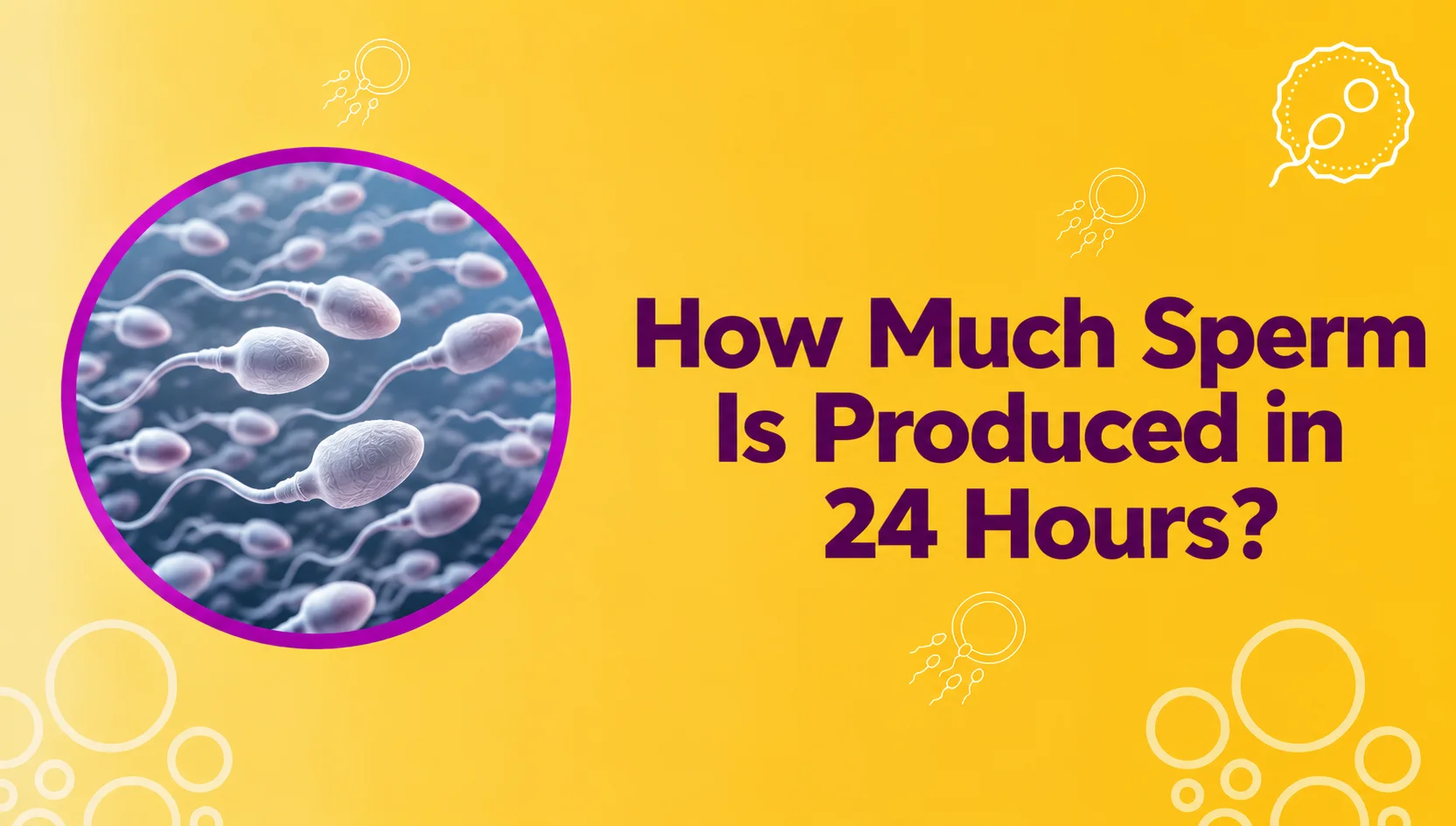
How much sperm is produced in 24 hours? This is one of the most common questions men ask during fertility consultations, even if they don’t say it directly. Some are trying for pregnancy. Others are worried after frequent ejaculation. A few come in after reading conflicting information online.
The male body produces sperm continuously rather than making a new batch only after ejaculation. Research suggests that a healthy adult man may produce around 100 million sperm cells per day, although production varies considerably between individuals.
However, daily sperm production is not the same as the number of sperm released during one ejaculation. Semen volume, sperm concentration, sperm movement and overall sperm health all provide different information about male fertility.
In this guide, we explain how much sperm is produced in 24 hours, how long sperm takes to develop, what happens after ejaculation and when a semen analysis may be helpful.
How Much Sperm Is Produced in 24 Hours?
A healthy adult man may produce approximately 100 million sperm cells per day, although the actual amount can vary widely.
Sperm production takes place inside the testes in microscopic structures called seminiferous tubules. The process is known as spermatogenesis and continues throughout adult life in men with normal sperm-producing function.
Daily sperm production depends on several factors, including testicular function, hormonal signals, age, certain medical conditions and individual biological differences.
It is important to understand that the daily production figure is an estimate. There is no single daily sperm count that applies to every man, and it cannot be measured accurately just by observing semen volume.
How Much Sperm Is Produced in 24 Hours in mL?
Sperm cells and semen are not the same thing.
-
Sperm are the reproductive cells that can fertilise an egg.
-
Semen is the fluid released during ejaculation. It contains sperm cells along with secretions from the seminal vesicles, prostate and other reproductive structures.
Because semen contains a substantial amount of fluid, the volume released in millilitres does not tell you how many sperm cells are present.
For example, two men may each release 3 mL of semen, but one may have a higher sperm concentration than the other.
There is therefore no reliable way to convert the estimated daily production of sperm cells directly into a volume in millilitres. A semen analysis measures semen volume and sperm concentration separately.
How Long Does It Take to Produce One Sperm?
A sperm cell takes approximately 2 to 2.5 months to develop through spermatogenesis, followed by additional maturation in the epididymis.
The process involves several stages:
-
Cell division: Germ cells in the testes divide and develop into cells that will become sperm.
-
Cell development: The developing cells undergo changes that form the head and other structures of the sperm.
-
Tail formation: The sperm develops a tail that helps it move.
-
Release and maturation: Developing sperm are released into the seminiferous tubules and travel to the epididymis, where they acquire the ability to move effectively.
Although an individual sperm takes weeks to develop, many sperm cells are at different stages of development simultaneously. This allows sperm production to continue every day.
Does the Body Produce Sperm Only After Ejaculation?
No. Sperm production is an ongoing process and does not begin from zero after ejaculation.
The testes continue producing sperm, while mature sperm are stored temporarily in the epididymis. Ejaculation releases semen containing sperm and fluid from the reproductive glands.
After ejaculation, the amount of semen and the number of sperm in a subsequent ejaculation can change, especially if the interval between ejaculations is short.
This temporary variation does not automatically indicate a problem with sperm production or fertility.
How Much Sperm Is Released in One Ejaculation?
The number of sperm released in one ejaculation differs from the number produced throughout a day.
The World Health Organization's sixth edition of its semen laboratory manual provides reference values based on men whose partners conceived within a year. The lower fifth-percentile reference values include:
| Semen parameter | WHO 2021 lower reference value |
|---|---|
| Semen volume | 1.4 mL |
| Sperm concentration | 16 million per mL |
| Total sperm number per ejaculation | 39 million |
| Total sperm motility | 42% |
| Progressive sperm motility | 30% |
These figures are reference values, not strict boundaries between fertility and infertility. A result below a reference value does not automatically mean that a man is infertile, and a result above it does not guarantee pregnancy.
A clinician interprets semen analysis results alongside medical history, examination findings and the couple's fertility circumstances.
Source: World Health Organization, WHO Laboratory Manual for the Examination and Processing of Human Semen, sixth edition, 2021.
How Much Time Does It Take for Sperm to Regenerate After Ejaculation?
Sperm production continues after ejaculation, but there is no fixed timetable that guarantees complete replenishment after a particular number of hours.
The sperm count and semen volume in a subsequent ejaculation depend partly on the interval since the previous ejaculation, along with individual reproductive function.
A shorter interval may result in lower semen volume or a lower total sperm count in the next sample. Longer abstinence can increase the amount collected, but it does not necessarily improve every measure of sperm quality.
For this reason, claims such as “sperm fully regenerates in exactly 12 hours” or “every man needs three days to replenish sperm” are oversimplifications.
If you are preparing for a semen analysis, follow the laboratory's instructions about the recommended abstinence period. Consistent sample collection conditions help clinicians interpret the result.
Can Sperm Regenerate in 12 Hours?
Sperm production continues during those 12 hours, but this does not mean that all sperm released previously have been replaced.
If a man ejaculates again within a short interval, the second sample may contain less semen or fewer sperm than the first. The degree of change varies from person to person.
A lower count in a second ejaculation does not by itself indicate permanent sperm depletion or infertility.
If you are concerned about your sperm count, a laboratory semen analysis is more informative than trying to estimate sperm regeneration by the time elapsed after ejaculation.
How Many Times Can a Man Ejaculate in One Day?
There is no single medically established maximum number of ejaculations that applies to every man.
Some men may ejaculate more than once in a day, while others may prefer less frequent sexual activity. The interval between ejaculations can affect semen volume and the number of sperm in each sample.
Repeated ejaculation may temporarily reduce the volume or sperm count of subsequent ejaculates. This is not the same as permanently damaging the testes or stopping sperm production.
If ejaculation causes persistent pain, bleeding, significant discomfort or other unusual symptoms, seek medical advice.
Does Frequent Ejaculation Reduce Sperm Count?
Frequent ejaculation can reduce the sperm count measured in an individual ejaculation, particularly when ejaculations occur close together. However, this does not generally mean that the body's ability to produce sperm has been permanently reduced.
The relationship between ejaculation frequency and fertility is more complex than a simple rule about saving sperm.
For couples trying to conceive, intercourse every one to two days during the fertile window is a practical approach. Daily intercourse is also generally acceptable when both partners are comfortable with it.
There is usually no need to abstain for many days solely to build up sperm before intercourse. If a clinician has recommended a specific schedule because of a semen analysis or fertility treatment, follow that individual guidance.
What Factors Affect Sperm Production?
Sperm production and semen quality can be influenced by several biological and lifestyle factors.
1. Hormonal Health
Hormones such as follicle-stimulating hormone (FSH), luteinising hormone (LH) and testosterone play important roles in sperm production. Hormonal disorders can interfere with this process.
2. Age
Sperm production and semen quality can change with age. The extent of these changes varies, and age alone cannot determine an individual's fertility.
3. Medical Conditions
Conditions such as varicocele, certain infections, undescended testes and disorders affecting the reproductive tract may influence sperm production or delivery.
4. Smoking and Alcohol
Smoking is associated with poorer semen quality. Heavy alcohol consumption may also affect reproductive health and hormone function.
5. Heat and Environmental Exposures
Elevated testicular temperature and certain occupational or environmental exposures may affect sperm production. The effect depends on the type, intensity and duration of exposure.
6. Nutrition and General Health
A balanced diet, regular physical activity, adequate sleep and management of chronic health conditions support general health. However, no particular food or supplement is guaranteed to increase sperm production, and supplements should not replace medical assessment.
What Determines Male Fertility Besides Sperm Count?
Daily sperm production is only one part of male reproductive health. A semen analysis typically evaluates several parameters.
-
Sperm concentration: The number of sperm per millilitre of semen.
-
Total sperm number: The total number of sperm in the entire ejaculate.
-
Motility: The proportion of sperm that move, including those that move forward progressively.
-
Morphology: The proportion of sperm with a shape classified as normal under laboratory criteria.
-
Semen volume: The amount of fluid released during ejaculation.
In selected clinical situations, a specialist may recommend additional tests, such as hormonal investigations or sperm DNA fragmentation testing.
No single parameter can fully establish whether a man is fertile. Results should be interpreted in context, and an abnormal result may require repeat testing or further evaluation.
When Should You Get a Sperm Count Test?
A semen analysis can help assess sperm concentration, total sperm number, movement and other characteristics of semen.
Consider seeking a fertility evaluation if:
-
You and your partner have been trying to conceive for 12 months without pregnancy.
-
Your partner is 35 or older and you have been trying for six months without pregnancy.
-
You have a known condition or history that may affect fertility, such as undescended testes, certain infections, previous reproductive surgery or a hormonal disorder.
-
You have persistent testicular pain, swelling or other concerning reproductive symptoms.
-
You have previously received an abnormal semen analysis result.
Earlier evaluation may be appropriate depending on your medical history and your partner's circumstances.
Frequently Asked Questions
1. How much sperm is produced in 24 hours?
A healthy adult man may produce approximately 100 million sperm cells per day, although the actual amount varies considerably. Sperm production is continuous, and daily production cannot be determined from semen volume alone.
2. How many sperm are produced in one day in millions?
An often-cited estimate is around 100 million sperm cells per day. This is a broad estimate rather than a fixed target for every man.
3. How much sperm is produced in 24 hours in mL?
Daily sperm production is measured as a number of sperm cells, not in millilitres. Millilitres measure semen volume, which includes fluid from reproductive glands. A semen analysis measures volume and sperm concentration separately.
4. Can sperm regenerate in 12 hours?
Sperm production continues during this time, but complete replenishment of sperm released previously is not guaranteed. A second ejaculation within a short interval may contain less semen or fewer sperm.
5. Does daily ejaculation cause low sperm count?
Daily ejaculation can affect the number of sperm in an individual sample, but it does not generally mean that the body has permanently lost its ability to produce sperm. Fertility depends on multiple factors, including concentration, motility and overall reproductive health.
6. How many days should a man abstain before a semen analysis?
Follow the instructions from the laboratory or clinician. Laboratories commonly request two to seven days of abstinence before sample collection, depending on their protocol. Use the same recommended conditions if repeat samples are needed for comparison.
7. Does a high sperm count guarantee pregnancy?
No. Sperm count is one aspect of fertility. Motility, morphology, other reproductive factors and the health and fertility of both partners also influence the chances of conception.
8. What should I do if my sperm count is low?
Discuss the result with a qualified fertility specialist or urologist. The clinician may recommend repeating the semen analysis, reviewing your medical history and medications, examining possible causes, and arranging additional tests where appropriate. Do not start testosterone or fertility supplements without medical guidance, because some treatments can interfere with sperm production.
Conclusion
The answer to “How much sperm is produced in 24 hours?” is that a healthy adult man may produce around 100 million sperm cells daily, but actual production varies widely.
Sperm production is continuous, and ejaculation does not cause the body to restart the process from zero. Semen volume and sperm count can change between ejaculations, so neither should be used alone to judge fertility.
If you are trying to conceive or are worried about sperm count, a semen analysis and a personalised medical assessment can provide more useful information than estimates of daily sperm production.
Need help understanding your sperm count? Speak with a qualified fertility specialist to discuss your semen analysis results and the next steps based on your circumstances.